
What Is Radon?
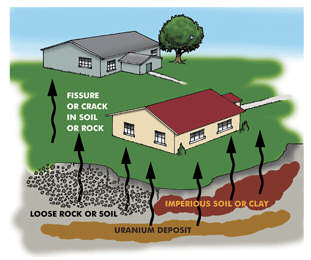
Radon is a naturally occurring radioactive gas formed by the decay of uranium in soil and rock. It moves upward through the ground and can enter homes through cracks in foundations, sump pits, floor joints, and openings around pipes.
When indoor air pressure is lower than outside pressure, radon can be drawn into the structure and accumulate to elevated levels. Long-term exposure to radon is a recognized health hazard and a leading cause of lung cancer among non-smokers.
Where Has Radon Been Found?
Radon has been detected in homes throughout Wisconsin and across the United States. Several inspection companies and agencies now share testing data publicly.
The Wisconsin Department of Health Services radon map provides a broad overview of known radon levels by region. This data is updated periodically as new test results are submitted.
How Can I Protect My Family?
The U.S. Environmental Protection Agency recommends taking action when radon levels reach or exceed 4.0 pCi/L. At this concentration, long-term exposure is roughly comparable to hundreds of chest X-rays per year based on EPA risk models.
Many homes can reduce radon levels below 2.0 pCi/L through mitigation methods such as sealing foundation openings and installing sub-slab or crawlspace depressurization systems. These systems are typically effective, non-invasive, and affordable.
Homes with private wells should also consider testing their water for radon, as it can contribute to indoor air levels.
How Is Radon Detected?
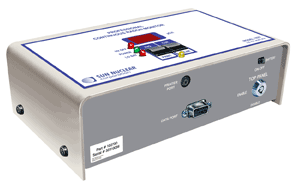
Radon can be measured using charcoal canisters, short-term self-test kits, or Continuous Radon Monitors (CRMs). Test kits require laboratory analysis and may take several days to return results.
We use professional-grade Continuous Radon Monitors operated under EPA-recommended closed-house conditions. CRMs provide hourly readings, faster results, and include tamper detection features to help ensure test reliability. Results are typically available the same day the test period ends.
What Is the Testing Process?
Proper setup and placement are critical for accurate radon testing. Unfortunately, improper procedures can produce misleading results.
We follow established testing protocols and provide clear written instructions at every test location. These instructions explain closed-house conditions and help homeowners understand how the test is conducted.
Click here to review our radon testing instructions (PDF).
Scheduling & Availability
Radon testing is available as a standalone service or as an add-on to a home inspection. Availability and fees vary by location and inspection type.